


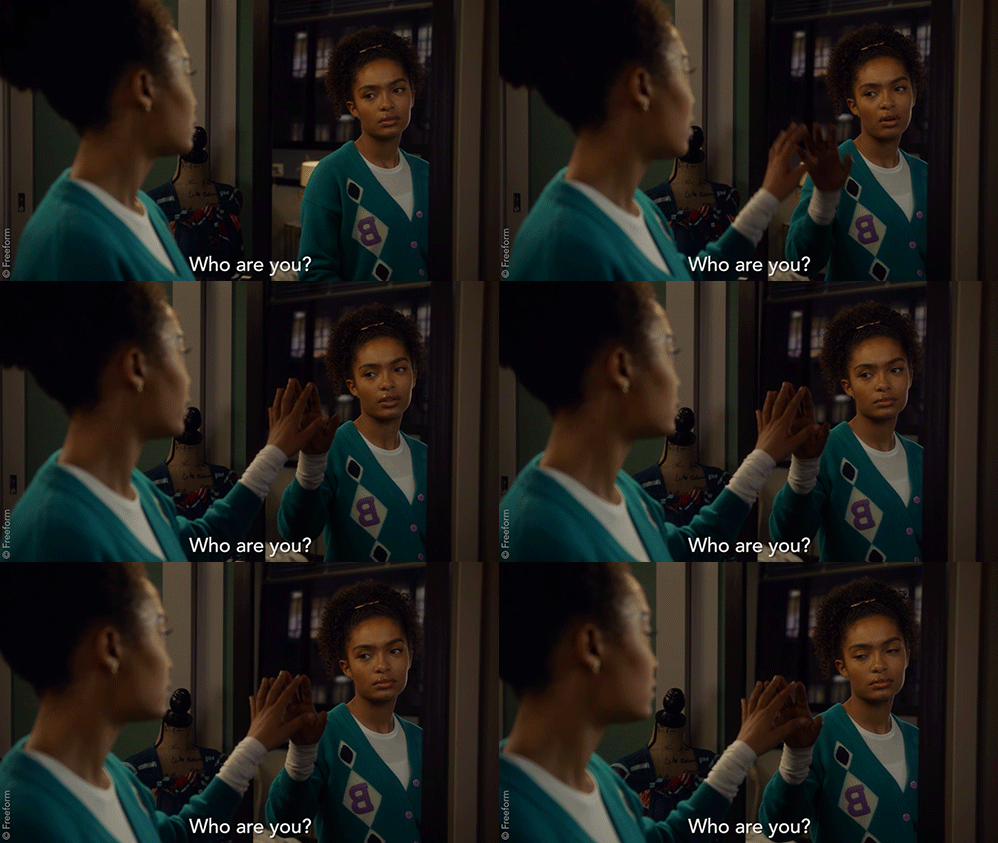
One of the strangest parts of growing creatively is realizing your work no longer fully matches the version of yourself people recognize.
Your eye changes slowly at first.
You become less interested in certain kinds of images. Certain aesthetics stop exciting you. The work starts pulling you somewhere quieter, stranger, sharper, more honest.
But externally, people still associate you with the older version.
The version that got attention.
The version that felt more familiar.
The version they already know how to categorize.
And that in-between stage can feel surprisingly disorienting.
Because now you’re trying to evolve publicly while your identity, your portfolio, and your instincts are all moving at slightly different speeds.
I think this happens to almost every artist eventually, but nobody really talks about it because from the outside it just looks like “rebranding” or “growth.” Internally, though, it can feel much messier than that.
There’s often a period where the old work no longer feels fully like you, but the new direction hasn’t settled enough to feel stable either.
You start noticing inconsistencies everywhere.
The portfolio feels uneven.
Your older images feel emotionally distant.
You become hyperaware of what no longer fits.
And because creatives are so conditioned to constantly optimize themselves, the instinct is usually to panic and overhaul everything immediately.
But I’ve started to think the discomfort is actually part of the process.
A photographer’s style usually doesn’t arrive fully formed in one clean revelation. It emerges through repetition. Through paying attention to the emotional patterns that naturally keep resurfacing in your work.
The kinds of spaces you gravitate toward.
The kinds of faces you linger on.
The tension, softness, stillness, or movement that keeps finding its way into your images whether you consciously intend it or not.
That’s why forcing reinvention too aggressively can sometimes disconnect you from the very thing trying to emerge.
Your work often knows where it wants to go before your brain fully catches up.
And honestly, I think the photographers who evolve best are usually the ones who allow themselves to listen long enough instead of constantly trying to outsmart the process.
The evolution feels believable because the emotional thread stays intact, even as the visuals shift.
You can still feel the same person behind the lens.
That’s what makes growth resonate instead of feeling performative.
Not constant reinvention. Just deeper self-recognition over time.